Movie Madness


135_unicornbloodmobileEverybody involved in the industrial production of mediopoly goods (movies, music, books, news) has been wondering what the new model will be for transactions in the age of the Internet.

There isn’t one. There isn’t going to be one.

There has to be one, right? How else will people get paid? Silly Rabbit, the ownership doesn’t care about that. The people who do the work—authors, rock stars, journalists, cameramen—they can all eat cake.

What about the executives and the shareholders and…and…you know, the patricians who have a little bit of ownership?

Nope, sorry ol’ chap. Not just professionals, freelancers, and working stiffs.

Yes, even the companies themselves are going to lose capacity. The movie industry, the publishing industry, the newspapers, all of it is going to shrivel up and break into little cubes. Taking any patricians invested in them down into the black gulf of unprofitability and layoffs with dramatic gnashing of teeth for the commentators.

The reason is simple: The world is going broke and nobody has as much money as they used to.

Rich people too—they’re holding onto their profits for dear life, not giving an inch—but the other 99% of the world didn’t have much to begin with and that’s all been tapped out.

All that’s left to take the hit are standards of living.

As they begin to drop all around the more developed countries, the industries that depended on income from the surplus of leisure spending workers had, well they shrink too. The CEOs of these industries are surprised because they thought they were part of the club. But hey guv’nor, it’s just business. Sorry to hear your son won’t be going to a top school anymore.

All the models that have been proposed so far—paywalls, pay as you go, subscription, kickstarters—they’re all dead ends. People got no money, dude! At best all you’re doing is finding efficiency techniques to redistribute whats left of a declining wage class with fewer dollars to spare.

The Internet is built around a distribution model, not an exchange model. Transactions that slow down the flow lose energy and crash out of the psychological lane of traffic.

Into this setup comes cheap entertainment from the Internet—and it’s all going to be free, all of it—mass produced and easy to make in more variations than you can consume. All you pay is your monthly Internet fee and that’s it.

Oh wait, that’s already here.

Pirates are just a bogeyman, something propped up there for people to blame like communism. The stockholders have to be told something, right?

The mediopoly companies will shift the rising cost of copyright enforcement and surveillance on the providers through the government. Mainly because they’re losing money and can’t afford to keep suing everyone. Yes, even they’re crowdsourcing the old fashioned way—on the public’s bruised back.

How long can they keep that up before they can’t afford the political favors anymore? How much can the government enforce when there’s less tax base to support the enforcement? It’s a turtle race to the bottom.

The providers can raise the prices, but again people are getting poorer and the variety of content naturally overwhelms big business content. If I can’t afford the latest HBO special I’ll just buy the craphound version off Netflix.

That’s another thing. There is no quality and there never was. There’s only your crap and my quality. You can argue that 3D Casablanca is better than Lord of the G Strings, but at the end of the day people will consume what they can afford. Fidelity loses to convenience when you can’t buy a Betamax.

People don’t want a good story. They want a story they believe is good.

That makes connection the only game to play in this environment. Some folks sense this and focus their attention on “reaching the fans” as if this was the new model itself.

Services like Pandora come close to databasing connectivity, but we’re still a long way off from any kind of prototype with which to make a media database standard. A Manhattan style Wikipedia project is probably what’s required.

Until that happens we’re stuck with “the hunt”. Friends as clue finders. I don’t care if I can get it all, I care about if I can get what’s mine.

That’s why services like Spotify don’t work as well as YouTube or Amazon’s recommendations. Tell me what part of the forest to look and I’ll get it myself. If the interface isn’t brute simple you have slowdown and again, you drop out of the psychological lane of traffic.

Even if connection is achieved though, it’ll end up being an efficiency advance. Something to mask the declining revenue pool a little longer.

The industrial age has reached its peak and is starting to decline. This confuses people because they’re used to things trending up, not down.

The owners of the world are extracting more from a smaller and smaller money pool through efficiency and productivity gains. Getting the gold is the goal, even if the river is drying up. The winners just make less.

It’s like that old Lexx episode, “Feeding Pattern.” The house still always wins, but full winnings are now half winnings and half winnings are now quarter winnings. Only in this case there’s no spaceship to take the owners to a new planet to start again.

What industry servants and their patrician managers refuse to accept is that the cost has been shifted. The slush pile has been moved to the public and crowdsourced.

Less pay doesn’t mean the death of publishing, it means more craphounds.

The craphounds see the gates to the river are now open to the public and think their chance to strike it rich has finally come. Then they see what’s left of the river.

The owners are abandoning the mediopoly factories and manipulating the remaining consumers into covering the upfront costs. Rust of media factories and their personnel is the natural outcome. Why invest in new infrastructure when the returns are going down?

Some industry folks think the problem is too many craphounds. No, that was always the cost of doing business.

The problem is that profits are shrinking. There need to be more craphounds to increase the declining pool of wizards that may still exist to be exploited before the enterprise enters the steep end of the decline curve.

You find your biggest wizards in the beginning. Then you plateau. Then you enter decline. This is how life works, folks.

So what’s going to happen?

Well the whole thing looks like a craphound mega-farm to me. This long tail mega-farm is too big for fiefdoms to control and still make a profit. What you need is probably something along the lines of Borg control nodes. That means a larger number of smaller, mid-list way-stations to provide structure and channel libido projections.

There will probably be one or two corporate overlords that remain, only in diminished form; everything else gets divided up into drones and drone units (seven of nine). The overlords will vacu-jack up the most popular and monetizable eruptions of public interest, extract the Gelfling essence. But these will become quarterly or yearly events.

Much as going to the movie theater is now.

The Internet cooperative has formed itself into a way to farm out labor most efficiently to the public leisure spending that still exists. It’s a development that serves the reactive ownership in masking something more significant.

What does crowdsourcing the gatekeepers mean for servants in the mediopoly industry?

I predict extended periods of pressure to work twice as hard with half as much. Professionals will find themselves separated from their skills and positions as an identity. They’ll be expected to adopt a jack-of-all-trades model of independent contracting so they can fit into whatever flavor of the month project their patrician managers want them in.

As individual value is minimized, prestige and bargaining power will be reduced. Wages will shrink. In short, you’ll be a crew chief at Winky Dinky Dog, but it’ll be for less pay!

The patricians themselves will be forced increasingly into a hatchet man role as the owners come down on them hard to “cut costs” and “do things differently”. That’s Secret Langauge Noble for getting rid of servants and turning the treadmill dial up on those who still have jobs.

All standard plays from the ownership dream manual. The usual efforts to summon the psycho goals of free labor, automation of specialists, and value decoded by algorithm.

In short, the ideal vampire world. Fully socialized blood for the members of the Dracula Club! Anything less than 100% domination is a humiliating failure, so if the blood pool shrinks then the difference comes out of your neck first.

Meanwhile, the craphound mega-farm grows a freelance economy of atomization, domination, and zero dignity all hand delivered like a pizza. It’s diabolically brilliant.

There is no next incarnation of distribution that enforces paid transaction. This is it folks. Hold your arm out and let Renfield insert the vacu-jack.

Not just movies, books, comics, newspapers, music and magazines, but even sports will be affected. This is the decline of the second capitol, of the conglomeration of culture. It’s simple economics.

Just wait until prices start to rise on computers again. That’s when things get really interesting.
132_aceofwandsThe posts have been scant of late mainly because I’ve been embroiled in the Battle of the Galaxies. Anything that shows up here has been what extra my psychic engineer has been able to coax out of the warp engines, so to speak.

This has been one Hek of an inner-stellar conflict. The entirety of the Booey Fleet versus the forces of the Gingerbread Witch. Several times now I was sure I’d been beat, only to bounce back into the fray with a renewed process.

I’ve been building a brick wall of the mind, followed by a brick oven of the windy spirit with which to throw that Gingerbread Witch into. I found suitable divine fuel in the form of the bountiful Ace of Wands bursting forth with Spring luck and potency. I’m going to blast that witch into ashes and smoke with healing fire ignited from my deepest soul.

That’s all I’m capable of doing now. It’s the only way to live my life and let those who love me live theirs. Everything else I tried bounced off her like dynamite or missile explosions against the giant tarantula. A psychic napalm of lava-storm is all I got left.

Kicked that Gingerbread Witch into the oven and I’ve shut the hatch! I never wanted to do this, but here I go. It’s time.

There is a flash of lightning, followed by the boom of thunder. The brick oven fire is ignited!

Here we go.

126_jessicaFor a long time I’ve had a roster of crewmembers who populate the internal main bridge of my psyche. You might say that the Star Trek organizational scheme provides a ready archetype for my thoughts and feelings to constellate around.

Handling the communications console is a personality named Jessica. I’m pretty sure she was meant to be the female companion who accompanies Logan in the 1976 film Logan’s Run. I had a childhood crush on the actress Jenny Aguetter who played Jessica in the movie.

At that age I thought Jessica the character was the real person and Jenny was just her name in our reality. So creating a character based on her in my own mind to accompany me on my journey of imagination, or just general life influenced by a personal inner world, seemed like a good idea.

The crew of the Starship Snipe still carries the internal psychic organizations I’ve given them to this day. However, I’ve never explored them in detail—they all embody personal connections with characters from books, movies and TV that I enjoyed growing up with.

With the UFO becoming the central organizing principle in my psychic voyage, it may be time to reexamine my crew and the starship model. Ultimately, Star Trek and the characters I’ve borrowed are someone else’s experience that has become collectivized.

Such communal models are easy to access and use. They have value to our survival. However, they can only be launch pads for our personal explorations. The human dimension of wholeness requires that we make a personal journey to inner space to align ourselves with the actual organic connectivity of people.

I need to strike out on my own and identify the processes and elements behind my image. What if I’m oppressing or harming some aspect of myself by relating to it through a simplified model of consciousness?

So here we go. Using my power of imagination to inquire about Jessica as an internal personality and psychological adaptation.

The name Jessica comes up in my dictionary as having a Hebrew origin—Yiskah and Iscah which means “shut up” or “confined”. There’s a Greek and a Latin version, Ieskha and Jesca respectively. Unfortunately there’s no cultural context to go on, I’ll have to beam in the Internet connection.

Which, as it so happens, is Jessica’s job on the starship. She’s helping me along with this, naturally. Maybe this is a search for identity episode, a character building moment where I finally gain enough understanding to grasp a concept of her personality.

I think of the Teen Titans comic issue #38—”Who Is Donna Troy?”—where a detective investigation leads to the truth of Wonder Girl’s parents.

A strange smell of sanctity runs past my nose. That Holy Ghost effect that I know Lucerna would find compelling evidence I am on the correct trail.

The first recorded use of Jessica comes from Shakespeare’s Merchant of Venice, and refers to the daughter of Shylock, who is of Hebrew origin in the story. I also dig up numerous baby name sites that give variations of the meaning as having to do with either God seeing, watching and beholding, or referring to gifts and wealth.

I let this trail of synchro-mysticism go off into the woods for now. Next up is the position itself.

The communications officer in Star Trek has often been criticized as being little more than a switchboard operator, with Lieutenant Uhura’s role minimized many times to the point of uselessness. I agree with this assessment, mainly because the position is actually critical to the operation of the ship. It requires someone who operates at a high degree of ability to perform properly.

Think about it. The communications officer has to direct the flow of information all over the ship. Repair crews, medical teams, and security details all rely on this officer’s leadership to act efficiently. If a crewmember notices something amiss the communications officer will likely be the first to hear of it and be able to warn the captain or relevant department head.

Depending on how you interpret the technology and schematics of a starship, the communications officer also needs a high degree of technical knowledge to operate the subspace radio and long range sensors that go along with that. I could see skills in computer programming and electronics as being necessary.

Maintaining a selection of diplomatic strategies and tactics is a huge order. Languages, linguistics and translation all need a lot of theoretical as well as practical knowledge. The person in the position has to be adaptive, flexible, and open-minded as well as intelligent and highly trained.

There’s an element of espionage implied in this function too—ciphers, jamming enemy transmissions and releasing ship wide alerts. I can see why the Next Generation Star Trek world merged communications with security.

Needless to say, you see some hints of these roles with Uhura in the TV show, but it almost entirely disappears by the time of the movies. Space battles don’t require anything other than making sure the shields and weapons work. If they don’t speak English then shoot to kill. It’s profoundly anti-specialist, anti-technology, and anti-science.

Need to transmit or receive data or messages? Maintain channels of information in-ship? Jessica has done all this and more. I only vaguely comprehended it—mainly I fell into the trap of casting the girl on my ship into the role of social interaction mediator. See how powerfully influential role models can be?

The point of communication is to share, divide out, impart, inform, join, unite, and participate in. In other words, “to make common.” Such an important task! And yet, Star Trek has subsumed this role into something else after decades of making it a minor position.

No! Boo!

Well I’m bringing chat back, yo. Or at least recognizing what has always been there all along: Communications leader Jessica doing an incredibly difficult, complex, important job without recognition or respect from me. The collective reckoning needs to evolve; it’s way behind the times and has been fifty years ago.

At this point I have to start questioning my own assumptions. Is Jessica even her name? Is it a nickname based on a projection? Is Jessica really female, as a kid would grok it, or a human being from earth? I might be overreacting; it might just be the dialogue has been so limited as to include only basic details.

I’m usually not so good with practical questions. The time has come to face the difficulty and start asking, to open up a hailing frequency with my own communications officer.

Jessica, I’m listening!

One of the many kinds of unconscious life forms I encounter during existence patrol is the robotic-minded automaton known as a “clicker”. It refers to someone composed of artificial or inauthentic psychological components, a person who is “not their self” and operates according to collective behavior. They “whir” and “click” like a machine, in other words.

The term originally came to me from a derogatory epithet used for androids in the movie Creation Of The Humanoids. In this movie, a shrinking population of humans grows ever more dependent on manufactured humaniform robots to maintain their industrial, post-apocalypse lifestyle.

A radical group of humans, feeling their existence increasingly threatened by the artificial beings they have created, use the term to describe and focus their mutual dislike of the androids. They personify many of the qualities and wear costumes derivative of hate groups from Earth’s past. A kind of hyper-blended mélange of all the worst humanity has to offer.

The androids themselves are beings unto themselves, with desires and outlooks that naturally bring them into conflict with humans whom they serve. It is their intention to slowly let humans die off or put their brains into android bodies while they build a new world of android needs being developed and explored.

I know; how can I use a term even from a science fiction movie that denigrates and labels beings—even artificial ones—as Others? Just because I define the term as pointing to what I consider hostile or dangerous encounters doesn’t give me a hall pass either.

All I can say is that I’m pulling this use out into the open and examining it, questioning it, exploring it.

Creation of the Humanoids presents us with a story about how outmoded thought patterns are gradually minimized and replaced by the development of new ones. In a way, the hybrids of tomorrow (for that is what an android is) outmaneuver the prejudices and violence of their ancestors over a long span of time.

In real life, however, our range of psychological experiences are much more intricate and complex. Humans, androids, and robots all coexist together in the psychological sphere. The question is always, what kind of consciousness do they present?

As in the book The Runaway Robot, a mechanical being can develop and experience self-awareness and an empathy for non-robots. Likewise, as in the book Caves of Steel, humans can show their worst sides where the rights of mechanical beings are concerned, reverting to ugliness and undifferentiated effects.

The reality is that our concept of being-ness is open to interpretation. Tribalism as a survival instinct may not be enough anymore, or perhaps we have mainly “gone rogue”, become mad robots ourselves as a collective robotic entity and therefore need to reconnect our wires to what it means to be a unified individual organism. Maybe that’s how we find organic connections with people.

Open up the Animism cabinet and you’ll find the concept of everything having a soul. All beings relating to one another according to their nature–stone consciousness to tree consciousness to mosquito consciousness to water consciousness to heat consciousness to radiation consciousness. You get the picture.

Is there such a thing as a malfunctioning human? It seems to me at times as if there are indeed humans who have developed system errors and operate according to spurious logic. They are harmful and often hostile to happy operating procedures. The worst kinds present a fair face while secretly sabotaging your circuitry for the spreading of their does-not-compute static.

Of course, how do you know if you yourself aren’t a malfunctioning automaton? Can you self-diagnose or are you a replicant that doesn’t know who they are? I myself have to keep asking the question, or hoping that if I am then a human element will come along and repair me.

Self-defense procedures can interfere with the hard and necessary work of being human, of screwing up. That discomfort you feel with yourself can lead you to an organic response array.

The risk is always that you will sacrifice your operating functions helping someone else carry their overload another cycle instead of taking the painful step of restarting. Or worse, you find yourself projecting your own corrupt files onto someone’s open jack and flooding them with garbage-in.

I heard tell that the price of crossing the line is having to live on both sides. Am I a human? Am I an alien construct? The hybrid anxiously asks these questions for all beings.

In the meantime, I keep sensors on alert. Manufacturing procedures vary, and there are humans in the neighborhood who have a few bolts loose.

As the horror host transformation does its thing, all sorts of interesting sources of civilization are cropping up and showing us what they got. The Vortexx is certainly a formula worth studying, as they have managed to get quite a few things mixed into the creativity cauldron nicely.

There’s the Internet interface of a movie-based show under control of the hosts brought together by fate to make interesting stuff. Promos, old commercials, monster movies and horror host performances—this is where you start.

Then there’s the chat on the side. You can just lurk if you don’t want to get to know anybody. Everyone’s got the right to be a ghost if they wanna stay secret. Or you can jump in and become acquainted with all the weirdos and creatures out there gathered around a scary campfire for a good time.

Hey, it’s a party and it’s random. Enter at your own risk, just like a real life haunted house experience.

What really makes or breaks the experience though is the non-host contingent and the crowd they attract. You totally need a tight cast of characters or the shows won’t amount to much as they are unveiled.

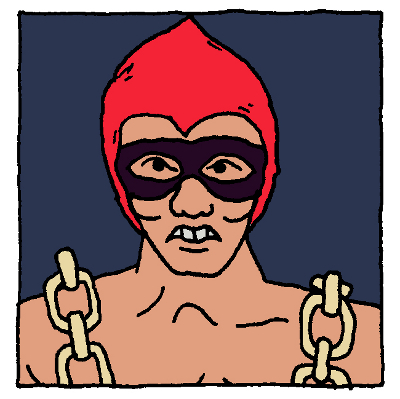
You’ve got far-out characters like the Crimson Executioner, a deranged torturer dispensing all manner of innuendos and witty quips while pushing jars of his royal jelly. Part charlatan, part Addams Family wicked joy, and part deviant with a passion for entertainment and a mind of courteous surprises—this apparition with a perfect body is far out, man!

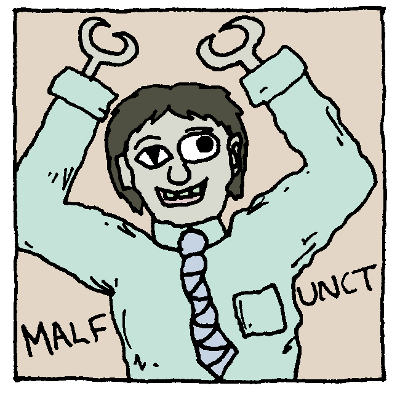
There’s DoktorSick, a fiendish high tech experimenter with an electronic eye for captivating clips and disturbing juxtapositions. Yet behind that fevered mask of skeletal cyborg mayhem pulses a brain capable of creative insights with sophisticated impact.

You’ll find Jason “Egg” Brown, a soft-spoken lunatic curator of the forgotten and dusty circuits of the Internet, pushing arcane dials and adjusting human spines to keep the show live as a wire.

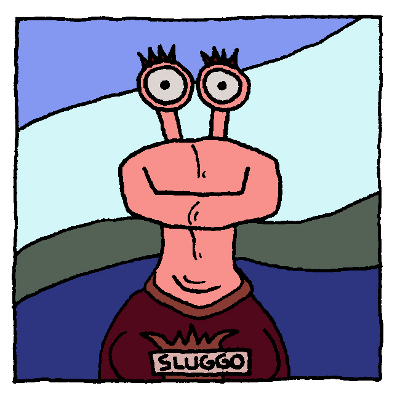
Then there’s Sluggo, arguably the crown jewel and mascot of the Vortexx crew, an inter-dimensional pink slug with eyestalks inspiring a tidy ship and dispensing random blessings of outrageous character. Sluggo welcomes everyone and declares the spirit of friendship to all comers.

The line up is always changing. Hey this is vaudeville folks; blink and you miss the rotating walls and trap doors swallowing up people behind you. That’s kind of the theme: the Vortexx as a locale that is both a central gathering point and an unstable dimensional hodgepodge.

The weekly alternating schedule looks like this:

  • Monday you’ll find yourself entertained by the inestimable Dr. Sigmund Zoid and his bag of Alternative Realities.
  • Tuesday brings you the momentous Mr. Mephisto from Lenny’s Inferno or the fathomless green Freakshow from the Bordello of Horror.
  • Wednesday has the insightful yet skeletal Nigel Honeybone from the Schlocky Horror Picture Show or a disturbing chuckle or three courtesy of The Host from Screaming Horror Theater.
  • Thursday summons forth the indescribably bizarre Justy Ghost from Shocking Theater.
  • Friday blasts off with Demented Drive In Theater and the crack horror crew of Floyd Cadaverous, Nurse Evilynn, Kenny Wickman and Grandpa Larry—or Fright Night Theater hosted by the gotta-see-him-to-believe-him Pumpkin Man.
  • Saturday winds up the week with the Late Dr. Lady Show, hosted by the brilliant David Lady and his steadfast band of Laura Lady, Ilean, and Wolfie.

Random spin-the-bottle bonus appearances include the Ghoul Kids and their Undead Show, Riggor Mortiss and Nyte Angel from Riggor Mortiss Presents, Scarewolf doing some Saturday Fright Special, and freaky shorts courtesy of Shocko the Clown.

I’m pretty sure the non-host units keep a few special surprises stashed away, and they are always generating new ammunition to load your brain cells with. For example, the inventive Rizzle MaNizzle the Clown once prank called Crimson Executioner and turned it into a short on the show! Unscripted improv right before your very eyes.

So you hop on over to the website, fiddle with the chat interface to get your nick and text color set, and watch movies that epitomize the greatest attempts at self-civilization since Aristotle, all with a bunch of strangers who slowly begin to take shape as not just horrific creatures of all kinds but also family of the heart.

You better watch out or you might have some fun!

Whatever has been going on since I started down this creative procedure it has been going about its business hidden from conscious view. I haven’t been immediately aware of much more than “something” is happening, and so I’ve waited for the next step to appear and indicate whether I might join in with a conscious intent of any kind.

“Still waters run deep,” said my friend Kimaroo recently. Oh yeah, that’s right! I forget these things, whether its concerning people or matters of psychic complexity.

Then, an eruption. Or rather, an image of molten liquid in motion as if it were magma spilling out of the earth. And yet, transition into a process more amenable to human interaction: A foundry.

I live in the area of the country that is known as “the foundry” after all. Funny that something I take as a negative about the place I live should suddenly take on a very vital and important force of life!

I watch the opening sequence of the 1976 adventure yarn At The Earth’s Core and then it strikes me that this is exactly what is happening. Strange primordial powers deftly transformed by a sleight of hand into a process familiar to human endeavor. Though still fantastical given that a fantasy craft is being built out of this process, incredibly.

When I started I was composing a crystal matrices to bring together the elements and intentions I would need. Next I revealed the components and blueprints I would use (I’ve found others since then). I’ve been working on transpersonal narratives necessary to my journey. Molds that will serve to form the parts I will use to build the finished craft. And now, we are at the foundry.

I search for and find a diagram that shows me how it all works on a mundane but necessary external level. The elements are brought together into various furnaces and other mechanisms that turn the elements into the compounds that will make up the parts. Moving from lowest to highest, from the Blues up.

The central image of the molten liquids is where it all comes together—the crucible and cauldron of utmost hazard and intense energy directed towards the formation of psychic parts. Sparks fly, liquid fire falls to the ground in sizzling droplets. I am witness to a process inside myself of great childhood power.

The parts, cooled and cleaned then go to a place of manufacture. Industry is a word that has to do with women’s work. It may be directed towards mostly destructive, accumulative ends—yet the hands that strike the anvil and thread the wire are borrowing the true form of crafting: Introspection. Creating substance out of thought and from that substance, goods.

I dreamt of a UFO being sighted in a way that was also recognition of a form to be. Input from the dream state, cooperation from the unconscious.

I come across a video of The Bamboo Saucer, a film that in a way is about earthlings struggling to understand a UFO and direct its use towards peaceful means. This is, in a sense, a training manual and familiarity exercise to show me that I have been studying up for this since I was young.

K and I watch GalaxyQuest, and it dawns on me this is also a relevant experience of understanding. Of knowing that what you imagine is real, while also recognizing that it is absurd and that life is filled with terrible changes into new forms of consciousness from which life emerges, better than before.

I’m coming to an understanding of the tremendous forces at work within me, of me choosing to become part of this process and behold a beautiful, mysterious Karavos revealed to me.

Her name is coming to me.

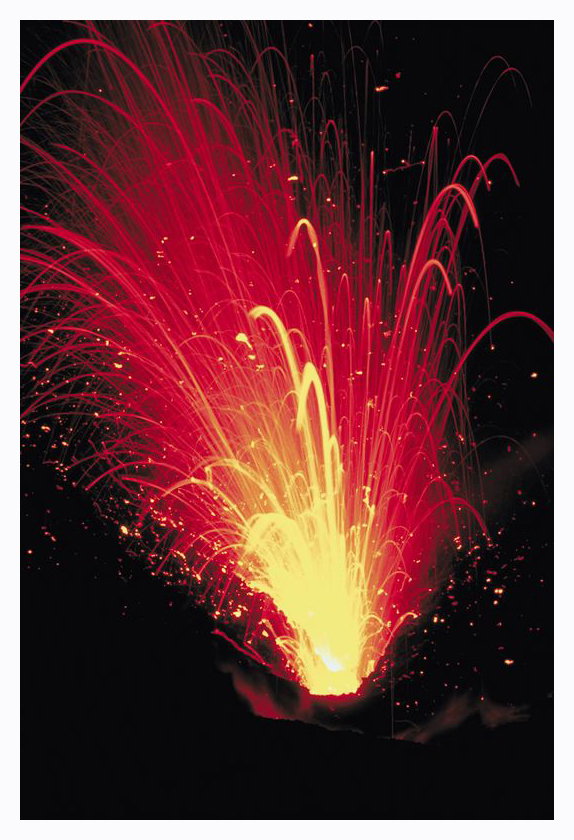
Kablooey!No sooner have I witnessed the spectacular display of magnificent enlightenment that is smarter than the average bear then I’m drawn into watching videos of erupting lava. Unbelievably hot material charged by the heat of the earth and forced onto the surface. Lambent orange-yellow creation and destruction that is dangerous, hypnotic, and moving on a deep level.

The forces of our central being called forth to the range of our consciousness by the awakening sound of the noise—noise—noise!

It is an actual external event we behold with our senses and contemplate with our innermost thoughts. We are reminded of when it is an internal event, our vast panorama of experience widened and enriched by the forces inside ourselves.

Sometimes, forces we did not expect demolish towns we built for ourselves. At other times we are fortunate to be removed enough from the process to have a reasonable level of safety, but are close enough to allow the magnitude of the event to move us.

This eruption of energy from the deeper levels of our existence brings new land, full of delicious minerals for the plant life that inevitably follows. It is true we need the greatness inside to come out and renew our conscious life.

It occurs to me that while there is a certain impersonal fate to the catastrophe of an eruption in the external world, there may be a meaningful connection to the volcanic activity in our psyche. There is a story, a drama hidden in the seemingly inscrutable mystery of how we came to be experience this eruption, however we find ourselves participating in it.

The world hears the call and responds, dancing. There is movement and heat, and the flush of release and timeless joy.

And what is our part in that?

Pick out some movies that use eruptions to drive the situation such as Dante’s Peak, or resolve it: like One Million Years BC. We are forced to adapt and respond to what has come forth as a result of the call.

The vuvuzellas have been calling all this time. The difference is that someone heard it.

They look closer at what is happening, they are alert to the change in themselves. The journey to widen their small worldview has begun. Kaboom.

I admit, does one really want to be around when the ultimate volcano finishes off all the dinosaurs? At least in the psychic adventure, all that was no longer needed or had become a wasteland of inauthentic life gets destroyed. Blown away.

It’s time to know you live, so that the world may live and be renewed. Hear the call; accept the eruption that is the response.

Yet always there are still those lost souls who need to experience the call through others. They have wandered too far seeking the dew from faraway flowers in shadowed glens.

Yogi Bear is a generally decent being. Smarter than the average bear, he hunts the elusive picnic basket while dodging the romantic inclinations of Cindy Bear. The Ranger does his best to keep Yogi (a yogi? A teacher?) within the confines of general bear existence without havoc ensuing to either the tourists (voyeurs?) or the picnic baskets (containers of food—life—bliss?).

Kind of a standard cartoon tension you find from Hanna Barbara outfits. Well sometimes things get turned upside down and all havoc breaks loose. That’s kind of what happens in the old early-eighties movie Yogi’s First Christmas.

After those killer bees woke me up to the vuvuzella phenomenon and dialed me in before I missed the train completely, I started getting the shakes one day. You know, patrolling the perimeters of the neutral zone for invaders from butt-town who don’t like to get down.

Hey! That’s right, wasn’t there this movie with Yogi Bear in it I actually liked? Sensor sweep is ON, Babykins. Oh yeah there it is coordinates ready to beam aboard for ducats transfer. Hey, cheap considering the civilization one is poring over.

So in a nutshell, what is that dang show about?

It’s winter at the Jellystone Ski Lodge. Yogi Bear and his compatriot Boo-Boo are fast asleep in hibernation land, so the Ranger is looking for some well-deserved (he thinks) rest. When the bears are down and out for the winter, he gets his summer vacation so to speak.

Special guest stars include various characters from other cartoons. Augie Doggie and Doggie Daddy, Snagglepuss, and Huckleberry Hound. Besides offering a number of views on events in the movie, they also double as generic extras in every scene requiring “people”.

Their presence is to ensure that this is a memorable and fun holiday at the lodge. Who wouldn’t want to hang out with such a festive and interesting bunch? Who wouldn’t sympathize with them and their friendly outlook?

Only, the manager of the ski lodge says there’s trouble! The owner of the ski lodge, a Mrs. Throckmorton, is coming to inspect the premises and make a decision as to whether or not to close the lodge permanently. See, there have been all these strange happenings driving visitors away…

Chances are, unless the staff puts on a grand show of all grand shows the lodge is finished! Because while the Ranger is good at dealing with Yogi Bear, he is generally poor at just about everything else. The manager is really just a satellite extension of the Ranger, representing “the suits” behind administration.

But wait, there’s more!

There’s a mean old hermit who hates Christmas and all them “do-gooder city folk” ruining his solitude with their crummy good cheer. Well, this time, he’s decided he’s had enough and is going to go Nuclear Grinch on all their big behinds.

Although, he doesn’t have any elaborate plan other than ruin or destroy stuff. Which is actually kind of funny even though if he’d pulled any of it off people would have gotten hurt or killed.

Extra bonus!

Mrs. Throckmorton’s nephew is a spoiled rotten little brat who hates everyone and especially hates Christmas. He decides to make everyone pay by makin’ mischief. Oh! Who could it be pulling these pranks on us nice cartoon characters?

The little brat eventually hooks up with the hermit and they join forces to make this the worst Christmas ever. After a song where they sing about their mutual hate of Christmas and the horrible things they will do, of course.

Good times.

Looks like the lodge is toast. Not only that, but the good guys are going to work their little rumps off trying to make a good impression, and when they fail will probably think it was all their fault for not trying hard enough!

Unfortunately for the bad guys, Yogi Bear hears Christmas singing and wakes up. He decides to find out what the noise—noise—noise is all about and leaves his cave. Boo-Boo has to keep an eye on him of course, and follows Yogi through the secret cave tunnel that leads RIGHT TO THE DAMN LODGE!

Okay, we are in weirdo land here folks. The Ranger finds all his powers useless during the winter. Yogi declares his intention to see what this Christmas thing is all about, and there’s not a thing Ranger can do but gnash his teeth while the manager panics. A bear on the loose is clearly much worse for the lodge’s prospects than all the vandalism and near-fatal accidents going on.

The guest stars are, of course, delighted to see their friend in a holiday special and support him fully. Yogi then proceeds to use his magic powers of effortless compassion and easy going slack to foil every damn plot by the bad guys by sheer dumb luck.

Every. Dang. Time.

Mrs. Throckmorton is immediately impressed by Yogi Bear and makes sure he is promoted each time he does something amazing. I mean, with a ski lodge with Yogi Bear protecting it from all danger and making everyone smile, who wouldn’t be impressed?

Somewhere off screen the owner must be seeing dollar signs, but from what I can tell she is just really excited that there is this awesome bear who fixes everything and is super polite and friendly while he does it.

Oh yeah and Cindy Bear gets wind of Yogi being up and decides to pursue him despite the need for her beauty sleep! Mistletoe and a music number showing Cindy at her most alluring, hoo boy.

Will Yogi manage to stay awake long enough to see Santa Claus? How will our two villains make out on Christmas Day? Will the lodge be saved instead of sold down the river for an oil refinery or strip mall? I’m pretty sure you can guess the answer to these important questions.

Watching this old show, I’m struck by how wholesome the story is. Ever since dark realism infected the popular entertainment feed trough, it’s been difficult to find any shows that dare to tell a story where things work out like gangbusters and pull it off. It all comes down to stance and technique, folks.

Yogi Bear rides the luck plane on nothing but good-hearted excitement and optimistic curiosity. This is the true spirit of adventure folks; watch a master at work. We’re all in need of this kind of energy awakening in ourselves to see and do things that have never been done.

All the other characters are driven by immediate, real world needs–responsibility of one form or another and the fear of rules not being maintained or of not doing one’s duty. The villains operate from a more selfish and dissociated form of behavior; sabotage of a system in which they feel cut off from.

Along comes Yogi Bear with his evergreen heart chakra glowing with warmth in the heart of winter. He hears the noise—noise—noise and is affected. Do we hear and are we affected?

The vuvuzellas are calling, even in the darkest night of Xmas Not.

The recent nuclear catastrophe unfolding in Japan right now brings me back to the time of the Japanese ghosts crying out to me. This comes at a moment when I am releasing myself of grieving for another dear friend.

I recently watched an old sixties movie called Crack In The World, a film I’d seen as a very young child and then later as a college punk. A dying scientist tries to tap the molten interior of earth to create a source of energy and minerals for industrial purposes, under the guise of “helping humanity”. Instead, he initiates a rapidly spreading crack in the crust of the earth that threatens to split the planet in two.

It strikes me as prophetic how movies such as this one, or Godzilla, warned us decades ago of the dangers of striving for Atlantean power beyond our wisdom as a species to use. Do the scientists who are possessed by satanic rationalism, or the government figures that puppet dance the industrial aristocracy’s interests ever get the message?

Long presaged in our dreams and made manifest in a work of cinema to show us the intention of the unconscious in response to the mindless savagery of our owners. A behemoth from the depths or perhaps the earth-shaking birth of a second moon grant us a glimpse of the suffering yet to rise from the depths of our own ignorance.

It’s all a moot point now. The industrial age is coming to an end and there’s not enough uranium or money to keep the madness going any longer. As the whole farce decays into rust, the big question is how many more accidents, how much more contamination before the nuclear energy dead-end goes the way of the Betamax?

The movies were right. Add a dose of humor, the enthusiasm of a child, or heroic sacrifice on the side of life and we might survive ourselves long enough for the super-predator to let us live to die another day. Maybe the point of it all was not to succeed, but to get to the next rest stop by doing whatever it took to keep on holding on.

Disasters force us to look at ourselves honestly, require that we confront the shadows we have pretended live in others. As I burn a stick of incense and say a prayer of grace for my departed friend Yoshie Izumi, I also look my own gruesome shadow in the eye with compassion.

Thank the living spirit for my stupidity! There may yet be hope.

I’ve gone on about the Count before, and it’s no secret that I admire what that undead dude does for the sake of civilization. This time, I’m going to go way out there and let people know what I’m all about.

There’s this DVD that came out, known by the illustrious title of Every Other Day Is Halloween. Basically, the changeable and fantastically talented core of which Count Gore is but one manifestation—near as I can tell an ordinary human being known as Dick Dyszel—is admitting the passage of time in order to let his story be told.

The movie on this disc tells the story of how Mr. Dyszel found himself a central figure in a local broadcast station, playing several inspired characters, before the forces of mediacrity moved in and demanded tribute in the form of the bottom line.

Along the way, you see how Mr. Dyszel inspired people with his individual and honest outlook, as personified by the characters he played and the shows he hosted—Bozo the Clown, Captain 20, and Count Gore De Vol.

Certainly, there are other folks behind the scenes who contributed to this outburst of creative depiction on local programming. And the spirit of the seventies no doubt played a part in what locals in the Washington DC area remember fondly as “better times”.

Peak times to be sure, and total respect to the unsung efforts of those who get things done, but it always starts with an individual carrying a vision, or a talent, or a way of existing in space-time that shows us what we have lost.  How to adjust our course and return to ourselves.  The true genius constellates those talents and circumstances necessary for raising our consciousness.

So what experience do you get when you buy into this examination of an inspired man’s exploration of himself for the betterment of the community?  Quite a lot, actually.  Though, with any localized phenomenon, there are going to be experiences that only those who lived through it will get.

However!  Keep in mind that the treasures waiting to be discovered are in and of themselves examples of the finest art and of inestimable value to those who seek insight.  Surprises and secrets await those who quest with an open heart, who can hear what has gone before and dare to recreate what may yet be again.

The cover itself is an enigma easily dismissed as an attempt to downplay the contents—Count Gore presenting a can of steaming offal and garbage, while caricatures of other horror hosts float around the vapors with comical expressions. Horror hosts have often hidden behind a veil of humor in order to make their performance less threatening and more acceptable to societal antibodies.  This is activism at the base—always speak in the terms familiar with the audience you find yourself before on any given show.

Look more closely though, past the sadness that is self-depreciation and see the truth behind the images. One has only to know that in many fairy tales it is the worthless thing—the junk—that one finds the most important things of all.

If the hosts are masked in humor, one has only to know that we the audience are always the biggest joke of all.  In that realization there is humanity and redemption—the host always throws us the viewer back upon ourselves to realize the awesome horror and painful glory of being alive.

Opening the case, one cracks open a casket of horrors, yet also proclaims that they live! Passing beyond the threshold, one finds a Channel 20 Club card amongst the expected insert and disc. Yes, there is something of the child in all of us who desire to belong to wonders great and beautiful.  In the local DC area programming of Channel 20, such cards were a visible sign of divine power and a reassurance that magic was abundant.

That the coprorate centers of power regularly co-op such toys of civilized play to encourage “loyalty” to mechanized food outlets is proof of their inherent inventiveness.  Artists, entertainers, and magicians all know the way to reclaim such treats, for is not the card part of the trickery that conceals the true magic in the mind? Beyond a doubt, Captain 20 knew the card trick to remind us how such small things matter.

The disc itself contains the movie, and a veritable infectious fungal colony of extras.  Most of these will be of easiest value to those who remember. Yet pay attention and you will see how improvisational television programs work. How character and setting contribute to situation even in a fluid dynamic such as a studio for viewers.

Variety acts thrive on this sort of transformation—commercials, contests and cartoon blocks are mere forms to be molded and rearranged at will.  Green muppet mutants, friendly adults dispensing worthy advice from the heart, or showing manga style programs way before the mainstream caught on—these are the stuff of which legends are made manifest.  Do we not save the world as audience when we remember ourselves, or as performer when we remind others with our smoke and mirrors of the human spirit?

The movie itself contains a story of an intrepid entertainer’s journey from rough ore to final realization.  What strikes me most is how grounded and ordinary Mr. Dyszel appears. One can almost see the grandiose and unstoppable force of his shadow as personified by Count Gore De Vol lurking in the background.

Is that not the supreme mystery and absurd irony of our times?  That only in the nicest and most unassuming of men could a creative force arise to spark the flames of a thousand and one hearts?

When one is confronted with the simplicity and utter banality of a sock puppet wearing a chef’s hat speaking kitchen wisdom to us with the utmost sincerity, do we not believe?  It speaks volumes for the depths of our own souls, whether we respond with kindness and smiles or turn away in revulsion.

Pity those who see only the surface and not the invention of a lone soul progressing his art beyond a mere tool.  They are the unfortunates consigned to make programming decisions from a vast distance.

Another key point worth noting is how the story progresses into the horror host phenomenon.  This is where Mr. Dyszel fumble-foots into a trove of glittering gemstones and becomes part of a signifier for a deeply relevant art form’s transmutation.

Exiled from mainstream television, only to return and finally be banished again, Mr. Dyszel would seem too nice to survive such a crushing blow as the loss of all he held dear—the beloved figurehead of a local television station yanked from the stage, how contemptable!   Nevertheless, Mr. Dyszel continued his exploration and found in himself the ability to manifest studio in a backpack.

As a result, Count Gore spread his creative power into the Internet, and now no longer needs the station to transmit.  Vanquish the shadow, and he returns again in a new form requiring that we reckon with him once more.  We cannot escape ourselves!

The Internet allows everyone and anyone to be both host and audience, without the coercion and repression one finds in the structure of an impersonal system of power.  Such an environment is a natural breeding ground and salon for a revivification of what can only be termed a capsule of catharsis through the ceremonial experience of violation.

Mr. Dyszel’s successful exploration of the ideas within his passionate being speaks for itself.  To invent his own show regardless of the trauma and set himself firmly at the next foundation of where all culture will be transmitted in the future?

It is nothing less than stunning.

The movie ends with the closing of a former door and the opening of a new portal to worlds undreamed of.  It’s a whole new shared creative space.  One might say the monster not only survived, but lived to help spread the horror of a profound mystery to those who will come after us.

The horror host movement seems poised at the edge of a vast unmarked frontier.  What the practitioner-audience hybrid will make of it is hard to say—anything goes now.  There’s enough history now to form an idea of how things work out of countless trailblazed innovations.  The reactions of those who are themselves following personal visions as hosts are worth studying.

For example, I see in the easygoing testimony of Jerry Moore—who manifests as the outrageous Karlos Borloff—an affection for what Mr. Dyszel has accomplished.  He gained strength from the things he learned by experiencing himself at play with Count Gore on the tell-a-vision.

It’s enough to make me believe that the medium of late night horror shows not only has returned in a renewed form, but in a sense is better than ever before.  One has only to see the de-atomization of the community and the rapid sharing of ideas to see a strange solidarity emerging.

An ancient form of performance taking shape before our very eyes. Watch the movie and learn how profound changes in the world transform the way we experience ourselves as people. That we should owe our very life and soul to a vampire as channeled by a wandering artist of great destiny is truly a miracle of the age.

The key question is: “Did he meant to do that?”  Was it part of the act, this death-defying leap into the future? Before you can stop thinking again, the Count is before you, telling a horrible joke to bring it all back around again.

Next Page »