Backwater


135_unicornbloodmobileEverybody involved in the industrial production of mediopoly goods (movies, music, books, news) has been wondering what the new model will be for transactions in the age of the Internet.

There isn’t one. There isn’t going to be one.

There has to be one, right? How else will people get paid? Silly Rabbit, the ownership doesn’t care about that. The people who do the work—authors, rock stars, journalists, cameramen—they can all eat cake.

What about the executives and the shareholders and…and…you know, the patricians who have a little bit of ownership?

Nope, sorry ol’ chap. Not just professionals, freelancers, and working stiffs.

Yes, even the companies themselves are going to lose capacity. The movie industry, the publishing industry, the newspapers, all of it is going to shrivel up and break into little cubes. Taking any patricians invested in them down into the black gulf of unprofitability and layoffs with dramatic gnashing of teeth for the commentators.

The reason is simple: The world is going broke and nobody has as much money as they used to.

Rich people too—they’re holding onto their profits for dear life, not giving an inch—but the other 99% of the world didn’t have much to begin with and that’s all been tapped out.

All that’s left to take the hit are standards of living.

As they begin to drop all around the more developed countries, the industries that depended on income from the surplus of leisure spending workers had, well they shrink too. The CEOs of these industries are surprised because they thought they were part of the club. But hey guv’nor, it’s just business. Sorry to hear your son won’t be going to a top school anymore.

All the models that have been proposed so far—paywalls, pay as you go, subscription, kickstarters—they’re all dead ends. People got no money, dude! At best all you’re doing is finding efficiency techniques to redistribute whats left of a declining wage class with fewer dollars to spare.

The Internet is built around a distribution model, not an exchange model. Transactions that slow down the flow lose energy and crash out of the psychological lane of traffic.

Into this setup comes cheap entertainment from the Internet—and it’s all going to be free, all of it—mass produced and easy to make in more variations than you can consume. All you pay is your monthly Internet fee and that’s it.

Oh wait, that’s already here.

Pirates are just a bogeyman, something propped up there for people to blame like communism. The stockholders have to be told something, right?

The mediopoly companies will shift the rising cost of copyright enforcement and surveillance on the providers through the government. Mainly because they’re losing money and can’t afford to keep suing everyone. Yes, even they’re crowdsourcing the old fashioned way—on the public’s bruised back.

How long can they keep that up before they can’t afford the political favors anymore? How much can the government enforce when there’s less tax base to support the enforcement? It’s a turtle race to the bottom.

The providers can raise the prices, but again people are getting poorer and the variety of content naturally overwhelms big business content. If I can’t afford the latest HBO special I’ll just buy the craphound version off Netflix.

That’s another thing. There is no quality and there never was. There’s only your crap and my quality. You can argue that 3D Casablanca is better than Lord of the G Strings, but at the end of the day people will consume what they can afford. Fidelity loses to convenience when you can’t buy a Betamax.

People don’t want a good story. They want a story they believe is good.

That makes connection the only game to play in this environment. Some folks sense this and focus their attention on “reaching the fans” as if this was the new model itself.

Services like Pandora come close to databasing connectivity, but we’re still a long way off from any kind of prototype with which to make a media database standard. A Manhattan style Wikipedia project is probably what’s required.

Until that happens we’re stuck with “the hunt”. Friends as clue finders. I don’t care if I can get it all, I care about if I can get what’s mine.

That’s why services like Spotify don’t work as well as YouTube or Amazon’s recommendations. Tell me what part of the forest to look and I’ll get it myself. If the interface isn’t brute simple you have slowdown and again, you drop out of the psychological lane of traffic.

Even if connection is achieved though, it’ll end up being an efficiency advance. Something to mask the declining revenue pool a little longer.

The industrial age has reached its peak and is starting to decline. This confuses people because they’re used to things trending up, not down.

The owners of the world are extracting more from a smaller and smaller money pool through efficiency and productivity gains. Getting the gold is the goal, even if the river is drying up. The winners just make less.

It’s like that old Lexx episode, “Feeding Pattern.” The house still always wins, but full winnings are now half winnings and half winnings are now quarter winnings. Only in this case there’s no spaceship to take the owners to a new planet to start again.

What industry servants and their patrician managers refuse to accept is that the cost has been shifted. The slush pile has been moved to the public and crowdsourced.

Less pay doesn’t mean the death of publishing, it means more craphounds.

The craphounds see the gates to the river are now open to the public and think their chance to strike it rich has finally come. Then they see what’s left of the river.

The owners are abandoning the mediopoly factories and manipulating the remaining consumers into covering the upfront costs. Rust of media factories and their personnel is the natural outcome. Why invest in new infrastructure when the returns are going down?

Some industry folks think the problem is too many craphounds. No, that was always the cost of doing business.

The problem is that profits are shrinking. There need to be more craphounds to increase the declining pool of wizards that may still exist to be exploited before the enterprise enters the steep end of the decline curve.

You find your biggest wizards in the beginning. Then you plateau. Then you enter decline. This is how life works, folks.

So what’s going to happen?

Well the whole thing looks like a craphound mega-farm to me. This long tail mega-farm is too big for fiefdoms to control and still make a profit. What you need is probably something along the lines of Borg control nodes. That means a larger number of smaller, mid-list way-stations to provide structure and channel libido projections.

There will probably be one or two corporate overlords that remain, only in diminished form; everything else gets divided up into drones and drone units (seven of nine). The overlords will vacu-jack up the most popular and monetizable eruptions of public interest, extract the Gelfling essence. But these will become quarterly or yearly events.

Much as going to the movie theater is now.

The Internet cooperative has formed itself into a way to farm out labor most efficiently to the public leisure spending that still exists. It’s a development that serves the reactive ownership in masking something more significant.

What does crowdsourcing the gatekeepers mean for servants in the mediopoly industry?

I predict extended periods of pressure to work twice as hard with half as much. Professionals will find themselves separated from their skills and positions as an identity. They’ll be expected to adopt a jack-of-all-trades model of independent contracting so they can fit into whatever flavor of the month project their patrician managers want them in.

As individual value is minimized, prestige and bargaining power will be reduced. Wages will shrink. In short, you’ll be a crew chief at Winky Dinky Dog, but it’ll be for less pay!

The patricians themselves will be forced increasingly into a hatchet man role as the owners come down on them hard to “cut costs” and “do things differently”. That’s Secret Langauge Noble for getting rid of servants and turning the treadmill dial up on those who still have jobs.

All standard plays from the ownership dream manual. The usual efforts to summon the psycho goals of free labor, automation of specialists, and value decoded by algorithm.

In short, the ideal vampire world. Fully socialized blood for the members of the Dracula Club! Anything less than 100% domination is a humiliating failure, so if the blood pool shrinks then the difference comes out of your neck first.

Meanwhile, the craphound mega-farm grows a freelance economy of atomization, domination, and zero dignity all hand delivered like a pizza. It’s diabolically brilliant.

There is no next incarnation of distribution that enforces paid transaction. This is it folks. Hold your arm out and let Renfield insert the vacu-jack.

Not just movies, books, comics, newspapers, music and magazines, but even sports will be affected. This is the decline of the second capitol, of the conglomeration of culture. It’s simple economics.

Just wait until prices start to rise on computers again. That’s when things get really interesting.

Rat droppings. That’s what all art is made of.

If you can’t taste it, then the art is bland and no damn good. If that’s all you can taste, then the art is garbage and only good for flybaiting.

The true struggle for civilization lies in between those extremes, in seeking ways to express and adapt to life that awakens our senses and stimulates our thinking. The Wizards show us how by demonstrating their unstoppable powers, so that craphounds may learn the proper application of rat droppings.

Except many folks don’t want to know what the secret ingredient is. Many of them would prefer others not know as well.

Nick Mamatas is unafraid to tell us the nasty truth about rat droppings in the writing industry. His book Starve Better lays out a series of essays and commentary on his experiences clawing for survival as a writer.

The book is done well, which surprised me. I knew the content would be good, but everything is arranged nicely and in relational order. Each essay has an aside text as if Nick himself were psyching you up for the punching you’re about to take. He’s in your corner, even as he faces you with the champion.

Get ready for your fantasy projections to take some hits though. Nick’s stories reveal the world of writing as a mean, exploitative business filled with dishonesty and confusion. There are opportunities for subsistence, but they take discipline and self-understanding to see clearly.

How else would you find rat droppings? Not from the multitudes of distracted and wrong-headed amateurs buying the image as they dash off like mice to the tune of a phony game show like Jumping for Dollars.

I love the craphounds. I love them like junk food sliders. But crumbs! We need to recognize that crap is where the flavor is, and if your entertainment has any value at all then I’ll bet you’ve got some dirt in there. It pays to face this fact.

Nick doesn’t stop there, even though revelations would be enough. He takes the time to seed his text with genuine insight and intelligent reasoning. You learn not just that things are seedy or absurd, but also why and how to make these features into a tool. Often, just knowing the trick exists is enough for you to be able to use it.

For example, his analysis of perfection as a false goal is spot on. Screwing up or having gaps can be an advantage once you recognize it as an inevitable process. Completeness, that is, a flavor that is all your own—a secret sauce—comes from understanding when to stop chasing the pearl. This shows Nick to be a kung fu master already.

You need tips? If you take his advice on listening you’ll recognize that everything a writer is exposed to is useful. This applies to his stories in the book as well. From figuring out how to do dialogue, to avoiding your story’s failure just before the finish line, you’ll find gems of insight.

His best piece of advice might be to pick a direction—to choose a publishing outlet and act on it. Too many folks get frozen in fear because of their hang ups. Nick shows you that yes it’s tough out there, but so what? Do it anyway! You’ll learn something, gain confidence, and have a few laughs regardless of how you do.

Because you won’t find any rat droppings or how to mix your secret sauce by sitting around trying to finish that last sentence just right. You’ll only be one more desiccated writer corpse for the sucker wagon. Next in line please! Have your blood and soul card ready.

How well will all this hold up over time? I suspect a lot of it will still remain crucial reading for some while. The world is a gruesome place more than it’s pretty, and certain fundamentals of needing to know how things actually work as opposed to what people are expected to believe never seems to change. That makes this book a desperate breath of fresh air.

If you’re a writer, then at least after reading this book you’ll understand better the reasons you are starving to the crisp. Your choices, right or wrong, will be better informed and more conscious—and that alone is reason enough to celebrate.

If you’re not a writer, the book is valuable as a snapshot of many of the things wrong with education, the arts, and human consciousness in general. Rat droppings are not going away.

5 out of 5 stars of the Magi.

There’s this courageous and original artist I know who does good work. Her explorations are top-notch: She is by turns vulnerable, honest, out of the ordinary, and determined. Watching her struggle and make slow discovery is similar to witnessing a lone brilliance dig up the forms that future civilization will be composed of.

I draw a simple picture of a kind of expression she was dealing with. That of having to do with allowing yourself to let go of the parts of your life that no longer suit the direction it is taking.

This is no small thing!

To give yourself permission to jettison those things you no longer need? It can be a grim ordeal. You feel as if you are betraying something, or admitting to yourself that bad news has come to town for real.

Facing up to denial of the shadows in our lives is a heroic act, especially when the taking of action is crucial—to allow ourselves to experience the warrior and swing our sword is shocking. When the warrior destroys what is outmoded, corrupt, or harmful there is a rush of energy in our body.

I’m sure Rogue Priest would have a thing or two to say about that, being of the warrior spirit.

My Hek-sistah once told me that there are times when you take an action and you experience it as an act for the sake of all beings in the universe. Your wishing for the enlightenment of all beings is, in a single moment, the same as that actual moment because in that moment it is experienced as true.

Even if that’s all you do—act with the intention—that is a tremendous step forward that benefits all beings in the universe. If you can follow it through and continue onwards that is great, but if you can’t it’s enough to intend for it to be so.

I’ve let go of the crummy butt jerks and misery nightmare torture wagons I’ve been hauling for the last two years. This Pegesus has kicked them all to the curb and moved on to new life.

I’ve given myself permission to do this. Even though it feels like failure on my part, and I never like admitting to myself that I can think of myself over other people.

And I’m dedicating this to all beings in the universe. Yes, even the bums I’m leaving behind to stew in their own juice. We all need to be free from domination and control, and to find our shining in this world of suffering.

All you beings in the universe, for the sake of our enlightenment I’m sayin it as I move on: “See ya sucker!”

I want to thank Birdman for taking over hosting duties for a while. As it turns out, I’ve been consciously occupied with outside events of personal importance that have allowed for very little in the way of inward journeys. So, thank you Birdman, you have been a true friend in keeping this haven for me while I was away.

What happened?

K and I moved to the Pacific Northwest. This is something we have been wanting to do for a long time.

I quit my job, we donated or recycled a bunch of our belongings, and declined to renew our lease. We packed up Gamera with some luggage and a pair of cat carriers (one medium and one small), and then anything that didn’t fit in Gamera went inside a huge POD.

Loading the POD and emptying out ten years of stuff from a three story townhouse was a supreme ordeal. You need mad Tetris skills and nerves of steel from having studied several episodes of the TV show “Hoarders.” It took 38 hours, 27 of which was straight-on-till-morning, without sleep.

After making sure the PODzilla transport arrived (they had tried to call us to confirm, but our phone was already disconnected), we loaded the three cats Michael, Frankie, and Blink into their carriers. K and I made sure they had plenty of water, litter, food, and comfy blankees to sleep or throw up on.

With star charts in the crevices of the seats and jammed to the gills with food, bedding, clothes and computers we left Reston Virginia behind and embarked on our galactic voyage across the country. We still hadn’t had any sleep, but we were determined to reach our first stop in Toledo, Ohio.

Sometimes a heroic effort is necessary to break free of the octopus of the past.

We got stuck in traffic. The DC Foundry has a strong gravity well that can be formidable—in this case we spent an hour going 2 miles before we managed to escape. The temperature was brutally hot, but the AC held and the cats managed not to freak out until we were actually out of the jam.

Blink needed some calming medicine and the others a little petting. This was an adventure they had never encountered before! Then we were off again.

I don’t know where I got the strength and the will to go on, but I drove through the night until we reached our goal.  Despite the hotel directions being incomprehensible we found the place.

The hotel staff allowed us to check in late and stay in past check out (bless their hearts) so we could get a few hours extra sleep. 44 hours is a long time to go without sleep, let alone move like a beast and then drive ten hours.

The cats rolled with it.

Then, every day the same: Get up, pack the stuff and then load the cats, check out, get breakfast, gas up, drive to the next stop. Des Moines (Iowa), Cheyenne (Wyoming), Ogden (Utah), Boise (Idaho), and then Portland (Oregon). Six days of travel and full of danger and hilarity.

I didn’t know if I could drive for such long periods of time. That was always something my father did, and did with great skill and stamina. So in a way I have made my contribution to the Drive Yourself Crazy Club of which Ferguses are said to be members.

There is something of a meditation in having to be alert and discerning for endless hours of monotony. The body adapts to the external demands that the mind serves to navigate.

If there is one insight I come away from, having been 2800 miles of distance through the United States, it is that the country is a huge resource extraction wealth grab for the rich.

Corn fields in Nebraska as far as the eye can see, making corn syrup. Beef fields in Wyoming making ground beef for the franchise wars. Refineries processing coal for energy. All connected by roads and truckstops, with a slight nod to tourism (if you can afford it). All fenced in and owned or dominated by big business, with no signs of civilization or individuality anywhere.

When the cheap oil runs out and the diesel begins to strangle the truck lines all of this will die, blow away, leaving ghost towns and blighted landscapes full of nitrates.

It’s already happening—I could hardly believe how much construction was going on with the roads. A third of the roads I drove were in a state of repair, traffic redirected to a single lane for 25 miles at a time, again and again. And the roads that were new were composites—where is the asphalt? The quality of the roads is going to cheap materials as it breaks down faster, talk about surreal.

We passed a lot of wind farms, and that’s great, but you aren’t going to be running trucks or building roads or making fertilizer out of wind power. To see this country propped up like a house of cards with all wealth going to rich institutions with no thought of what comes after is to witness the triumph of mindless evil over decent human life.

As K and I drove through this desolation of self-destruction we encountered the elements. A thundering torrential rainstorm in Iowa that would become a roaring hurricane a few days later sweeping the east coast in a fury, destroying phone and power for millions.

The smoke clouds from the south as we drove through Wyoming were the beginnings of the massive brush fires that would destroy countless homes in Colorado, of a size to stagger the imagination in its scope. We drove through areas where the fire had burned everything to one side of the highway and then gone out when it met the road.

Some fires still blazed in their enclosed firetraps. I thought we were passing through a strip mine, when I realized the black earth was cinders covering the landscape of boulders that remained after everything else had perished. This is the future—nature crushing us back into the savage garden from whence we sprang.

Just remember, global warming is only a liberal hoax!

The vision is a horrific one, and beyond my small power to affect—yet I still ask what it is for and I will to will Thy will in my transformation. I shall remember this and express my own personal potion when the time is right, for do I not also contain a small spark of fire inside me, a thunder being holding a candle alight?

Then we reached our destination. It was as if we had stepped through the protective mists of Lothlorien, where some small craft, healing, and knowledge is preserved.

We stayed at a Buddhist retreat run by one of my oldest and dearest of friends, allowing the cats to stretch their legs and us to remember a little of what it means to be human beings. Eat, drink, walk, recover—our journey done and the real work of building a new home begins.

Our apartment is small, but perfectly placed for us to begin again. Everywhere are trees, ferns, lichens, mosses, and birds. There are secret and hidden places for me to discover new ideas and form new substance in the world.

As I attended college here, I went to the reunion to witness and regard the connections to the past that still shape my life today. There are ceremonies of the soul that cannot be shared, but of which there is great sensation and emotion pouring out into one’s life.

My old life is gone, destroyed by a thunder-fire storm of psychic change. I am nothingness, out of which may come the dawn.

The other day I was reading a book for a class I was taking. One of those woo-woo marketing and business books barely above the level of pseudo-science called The End of Membership As We Know It.

There’s a part listing the three dominant generations of people in the country, along with characteristics that supposedly define them. I’m only doing a drive-by deconstruction here, so I’ll list some of the more interesting elements to me here:

  • The Boomers—Typically hard working, loyal, confident, competitive. These folks grew up in a time of affluence.
  • Generation X—Typically anti-authority, self-reliant, family focused. These folks grew up with workaholic and/or divorced parents, cable TV, and were reared to be self-sufficient (I take this to mean they were latchkey kids).
  • Generation Y—Typically digital thinkers, feel entitled, needy. These folks grew up micromanaged by parents, with technology, always rewarded for participation, and were reared to be high achievers.

Okay, I get that generalities are a good starting off point for discussion. I understand that in order to make sense of things you have to try and identify qualities people seem to have in common so you can take the discussion further.

I also get that generalities never survive close scrutiny. Once you start narrowing your peepers in at the details, you start to see how different people really are and how useless it is to try and ascribe labels to people. The individual always throws the bell curve of conformity, so to speak.

Forget all that. This list of qualities is almost complete and total junk. It’s a bunch of lazy half-baked imagery taken from the minds of business blankers who have strange fantasies of what the hoi-polloi are composed of.

It is, to put it not so nicely, wrong in the way phony people deceive themselves to cover up unpleasant truths about how people really are.

For example, “Gen X is anti-authority.” Really? Coming from parents of divorce and workaholics, of having to come home to a TV dinner and take care of themselves I would think it would be the opposite. That they are looking FOR authority, for structure, for someone or something to believe in. For a generation known for being “slackers”, how does the self-reliant come in?

I mean, this is so dysfunctional a description as to make absolutely no sense.

If anyone were “anti-authority” it would be the Boomers. You know, the flower children, the hippies, the children of the generation before them known as the Traditionals? Of course, what about all the anti-authority boomers who sold out to work for The Man? Is that the definition of “loyal”?

Generation Y are digital thinkers? What, they have electricity for brains? Okay, okay I get that it probably means they grew up comfortable with the Internet. Hello? Generation X grew up with Atari, ColecoVision, Apple II and the original Macs.

A lot of the Gen Y descriptions sound patronizing to me. Boomers were never raised to be high achievers or weren’t needy? George Carlin did a brutal comedy routine that mocked the Boomers as the most needy and entitled generation to ever exist.

Boomers didn’t grow up with technology? Some of the most significant technological advances in history were made while they were growing up. I know—television, the space program, the atomic age and the first computers don’t seem very exciting now that big business has moved on. But dude! Come. On.

See what I mean? There’s no depth or insight to these stereotypes. And that’s what they are—stereotypes that business leaders have towards middle class white consumers who have the money to spend on their products.

You want to know what I think the defining characteristics of these generations are? Okay get ready for this.

The Boomers are really Generation Boom, as in an explosion announcing the imminent end of the industrial way of life. They are the heralds and prophets of what will be.

You think the sixties are over? Dude, they are just getting started. The Booms were just the warm up act to the main event.

Or to take a bit of off the cuff from Rambo: “I’m alive, it’s alive, innit?”

Generation old X, middle Y and youngest Z are all siblings. They are the Omegas. The last generation to know mobility and prosperity. They are the disciples of the prophets, spreading the message and laying the foundations of the time to come.

They are more clever and resourceful than can be imagined by the vampires in suits.

No wonder the ownership struggles to understand these strange hybrids. So much promise! So little return on investment. Thus the narrow-minded and pathetic attempts to label them into alphabetical batches of human capital by manufacturing date.

Into this fun and exciting historical moment of decline and DEVO-lution will come into existence what I can only conceive of as Doom Generation, or “Doomsers” for short. They are the generation that will know war and collapse, as the end of the industrial age gives rise to an age of electro-agriculturalism.

They will see the rise of kings so powerful and horrific as to make Henry VIII look like a homesick hobbit. They will carry swords and use the telephone. Their children will be part monster, part truth-seeker and will grow up to build the foundations of an inner life beyond the reaches of academic or mystical conception.

No, you won’t be marketing to the Doomsers. They will see right through your medieval attempts to deceive their buying habits and laugh at your quaint nostalgia for the past.

And the Omegas will be stuck in the middle of two worlds, transition to transition, circuit to switch as the old world crumbles before a revelation of individual consciousness that will seem to the owners of the world like a zombie apocalypse, where a single scratch or bite will spread the venom of life to their cold blood.

The recent nuclear catastrophe unfolding in Japan right now brings me back to the time of the Japanese ghosts crying out to me. This comes at a moment when I am releasing myself of grieving for another dear friend.

I recently watched an old sixties movie called Crack In The World, a film I’d seen as a very young child and then later as a college punk. A dying scientist tries to tap the molten interior of earth to create a source of energy and minerals for industrial purposes, under the guise of “helping humanity”. Instead, he initiates a rapidly spreading crack in the crust of the earth that threatens to split the planet in two.

It strikes me as prophetic how movies such as this one, or Godzilla, warned us decades ago of the dangers of striving for Atlantean power beyond our wisdom as a species to use. Do the scientists who are possessed by satanic rationalism, or the government figures that puppet dance the industrial aristocracy’s interests ever get the message?

Long presaged in our dreams and made manifest in a work of cinema to show us the intention of the unconscious in response to the mindless savagery of our owners. A behemoth from the depths or perhaps the earth-shaking birth of a second moon grant us a glimpse of the suffering yet to rise from the depths of our own ignorance.

It’s all a moot point now. The industrial age is coming to an end and there’s not enough uranium or money to keep the madness going any longer. As the whole farce decays into rust, the big question is how many more accidents, how much more contamination before the nuclear energy dead-end goes the way of the Betamax?

The movies were right. Add a dose of humor, the enthusiasm of a child, or heroic sacrifice on the side of life and we might survive ourselves long enough for the super-predator to let us live to die another day. Maybe the point of it all was not to succeed, but to get to the next rest stop by doing whatever it took to keep on holding on.

Disasters force us to look at ourselves honestly, require that we confront the shadows we have pretended live in others. As I burn a stick of incense and say a prayer of grace for my departed friend Yoshie Izumi, I also look my own gruesome shadow in the eye with compassion.

Thank the living spirit for my stupidity! There may yet be hope.

There’s this television program I watched back in the day.  A show called The Prisoner that played on PBS (The Public Broadcasting Station). My folks and I would huddle around the television set and marvel at The Prisoner’s originality.

Ugh, the term “television” seems so dated now, even though it’s still useful in describing a dominant electronic device in use.  Who would ever have guessed television sets would end up being the precursor to the monitor, whose job it is to communicate computer activity to us?

Or that tell-a-vision would become 2-way?

The slot for The Prisoner was set at an hour, but the episode only lasted 45 minutes. Since this was PBS there were no commercials—what a novel concept!  A short program based around playing chess took up the remaining 15 minutes.

Jerky stop motion animation of a chessboard and its pieces, accompanied by a measured English voice, described the game as it unfolded. It was entertaining and engaging to my folks and I, so we stayed through to watch it.

But enough talk! The Prisoner is today’s topicality of chitchat.

What Is This Show On?

The Prisoner is about a secret agent (or perhaps he is a highly placed government official with access to sensitive information) who resigns from his job and begins packing for a trip. While he is loading up his suitcase, a group of men break into his home and fill the room he is in with knockout gas.

He awakens to find himself in a high-tech security town known as “The Village”. Everyone is called by a number instead of their real name.  His new name is “Number 6″, or just “6″. The Village is self-sufficient, cut-off from the rest of the world, and presided over by a director who is always referred to as “Number 2″. This director is almost always a new person in each episode of the show.

And those are the least weird parts of the place.

For example, The Village relies on security patrols (by foot, helicopter, and boat) to keep people from escaping.  But their primary means of recapturing escapees is a gigantic flying blob-sphere called “Rover”.

Rover paralyzes (and sometimes kills) those who go too far, bringing them back by dragging them to a pick up point.  The thing also makes really scary roaring and movement noises as it goes about its business.

The series lasts only one season, and consists of attempts by the forces of The Village, led by Number 2, to force Number 6 to answer the question, “Why did you resign?” Every kind of coercion is attempted, from outright physical torture to psychological manipulation involving hypnosis and drugs.

Number 6 tries to escape and resist as best he can. Most of the people who live in The Village are operatives for whatever political force runs the secret prison; many of them are undercover, posing as prisoners themselves.

Some inhabitants are genuine prisoners like Number 6 who usually think he’s “one of them”, or are too far broken down to be of use. Mainly it’s up to Number 6 to muster enough wits and skill to keep from being broken.

What Is This Post On About?

Okay, so if you haven’t seen this series yet then stop here and go watch it! I’m about to go into spoiler territory, so ahrooo!

The final episode of The Prisoner has provoked heated discussion over what it means. Basically Number 6 eventually turns the tables on his captors and is invited into the inner circle of power to join them as their new leader, or to depart.

In a surreal unfolding of events, Number 6 leads a machine gun attack on the inner circle and causes what looks like the destruction of The Village.  He and a few compatriots escape back to the real world, where these helpers resume their roles in society.  Number 6 drives off into the sunset.  The number on the door of his home says “1″.

What does the ending mean? How does it explain the events of The Village? Many viewers were expecting a sophisticated puzzle ending.  Here’s what’s been moving through my brain as I consider the meaning of the show for me.

The entire series represents a complex hallucination in which his captors attempt to brainwash him into a state of compliance, whereupon he can do no harm as an independent agent.  The elites of political entities really hate those independent agents.

At the end, Number 6 manages to overcome this hallucination and return to reality, symbolized by him leaving his home and driving off into the sunset, or the endless horizon of freedom.

Which can also be interpreted as a return to the cycle of the beginning of the series, but I think this only reinforces a closure of a complete experience in which Number 6 is no longer Number 1 or Number 6, but Number 0—a fool free to roam at will through any boundary or state of mind.

The last episode is a collapse of the hallucination and the return of sanity.  He has escaped his role as Number 1 (the leader of the system of coercion and repression which he served)—the mysterious butler is the part of him that “served” this system in his capacity as Number 1—and he has escaped his role as the prisoner, Number 6.

The inner circle would prefer he resume his post or be broken.  They divide his personality in an attempt to either cause his complete mental breakdown or remake him into his old role.  Perhaps they are the same thing!

However, instinct triumphs over programming. His stubborn refusal to give up his identity (“I am not a number, I am a free man!”), to cling to the zero as it were, preserves him.

Number 6 asks, “Who is Number 1?” and he is always answered, “You are Number 6.”  This is said in plain sight of the television watching audience many times.  He doesn’t catch the comma in that answer, nor does the audience!  “YOU ARE, Number 6.”

What’s That Again?

The interesting thing for me is how the conflict is always framed in terms of Number 6′s refusal to answer the question, “Why did you resign?”  The thing is, Number 6 answers this question at one point—that his conscience was bothering him about what he was doing.  Being Number 1 must have meant decisions that led to the suffering and death of not only many establishment agents, but innocent people as well.

For example, when Number 2 kills number 73 (an innocent woman), Number 6 reacts with brutal efficiency in destroying the man.  It must have been a similar incident—the death of an innocent in the performance of his duties—that led to Number 6 questioning his role. He gained back part of his soul when he felt remorse, and this in turn led to him to suddenly react against the system.

That Number 6 finally gives an answer—and this answer is ignored-—shows that his captivity isn’t about information at all.  It is about obedience.  The concern about his resignation is a pretense for removal of his identity and re-education.  Send him to the Gulag, folks!  Just make sure it is “justified” by some official reason.  That is, mask the real issue.

Number 6 tries to tell the inner circle but they shout him down.  “I, I, I!”  The magistrate looks on at Number 6′s anguished face.  He understands as Number 6 realizes, it has never been about his stand of conscience, or the fear of his going over to “the other side”—is there such a thing when the inner circle is both black and white in dress? Where the system is total and complete?

There is only one political force—ownership. They merely argue over method.

The Number 2 destroyed by Number 6 returns to initiate the last and most brutal interrogation of Number 6 before the final episode. The inner circle must have believed using this personality piece was key to breaking 6′s will. But I think by this point they had already lost the upper hand and were clutching at straws.

For this Number 2 is, in effect, a form of Number 6′s own past persona.  The part of him that initiated Number 6′s development out of the previous trauma involving the dead woman.  He has, in effect, betrayed the system by self-recreating his own conscience and therefore a person who does not fit under the typical number system.

Number 2 is “destroyed”. He is “dead”. The truth of self-captivity ended his ability to perform his duties. Number 6 is free to go.

This Number 2 is brought back to life and put on trail as an example of a “betrayer”, who bites the hand that feeds him.  But it is a futile gesture.  Nature trumps the system in the end, always. Number 6 is who our protagonist is now, and putting his old identity on a rocket to be shot into space is no use.

Not that the inner circle won’t try to place all the “bad” personalities into that rocket in hopes of being left with only a butler (Number 1).

The young man gunfighter Number 8 from the Living In Harmony episode is brought onto trial as well (as Number 48).  He is put forward as an example of youth that does not rebel in the societally accepted way. He is guilty of rebelling with no purpose, rhyme or reason—not unlike the fool.

This nemesis “kid” was used by the system to threaten others, but he had a drawback.  He was difficult to control and extremely violent.  Youth stifled and manipulated is a dangerous tool to the system.  When we allow the system to send youth out to kill those who oppose repression, we create dysfunctional individuals.

By refusing to fight, as Number 6 did in this episode, one threatens the source from which coercion draws the strength of its force.  Displaying a character who held this kind of basic stance of non-violence was the reason the episode was not allowed to be shown in the U.S. at the time.

It’s revealed that the Living In Harmony episode has been a hallucination within a hallucination in an attempt to get Number 6 to either resume his former post as gunslinger for the ownership or be a victim of his immature personality of violence and confusion, to be “destroyed” by his shadow as it were.

Number 6 “killed” Number 8.  By refusing to strap on a gun and a badge at the same time, Number 6 showed that he wished to remain independent.

Number 48 will also be going up into space on the rocket.

I, I, I!

Number 6 is sent into the rocket to meet with Number 1.  Meaning he will either end up in the tube with Number 2 and Number 48 (who are both laughing and babbling insanely) to be blasted off and disposed of, or he will emerge in a form suitable for control once more.

In the rocket, Number 6 meets a figure wearing the mask of the inner circle.  He strips the mask away only to reveal an ape’s mask underneath. He strips more masks off.  Finally he comes face to face with himself as the figure is revealed to be—himself!  The two of them struggle, the unmasked version of himself laughing maniacally and babbling like a fool.

A fool. His true self!

Number 6 attacks the guards and frees Number 2 and Number 48.  They lead a counterattack against the inner circle; launching the rocket in a surreal confrontation of energies that can only mean the fundamental construct of the hallucination can no longer be defended.

Isn’t that what the system is, after all? A shared imaginary space we participate in? But as they say in gaming circles, “system matters”. Dysfunction leads to typhoid game play and “fun, never.”

Rover is destroyed, melted to slag.  His job was to maintain the boundaries of the hallucination.  In the episode Many Happy Returns, Number 6 actually manages to escape back to the real world for a brief time.  There is no “Rover” or guards to stop him.  The purpose of letting Number 6 temporarily escape was only to fool him into thinking The Village was a literal place.  But it never was!

As the hallucination collapses, the personalities return to their appointed places in the psyche as the “world” becomes more real. We were only a short drive from London after all!  The youth, Number 48, goes off to hitchhike. Number 2 goes off to a job in the government. The butler enters the residence of Number 6. All the personalities within our fool protagonist return to their proper place in the psyche (and appropriate memories).

Number 6 gets in his car and drives off into the sunset/sunrise of consciousness. He is free to go.  At the very least he will awaken and perhaps find himself in a real captivity, but one in which he can actually physically escape from.

It is the fool who encourages us to resign, to claim our life as our own, and to reject numbers altogether. At the end of the adventure he comes around to encourage us to begin anew.
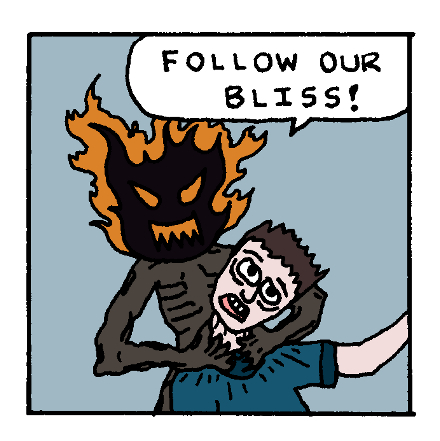
The collapse of the popular music sacrificial fire into millions of glittering coals marks the slow death of a sub-cultural era of psychic exploitation, repression, and propaganda. Beware of many last salvos as the conflagration expires, crackling and burning with a final extraction of warmth before we are free of the spectacle.

There’s been enough recycled commercialization through the grinder now to recognize the taste of the bodies being fed to us as having a same-old, lifeless lack of flavor.  To satiate our robust hunger for the flesh and bones of dreams we don’t dare for ourselves, the human fuel was piled high.  Every kind of expression, disposable and forgettable unless you happened to catch a particular body’s colorful spattering burst of color as it was consumed.

That’s just how the sausage is made, mind you. It’s true that sacrifice is what keeps us all alive.  Mindful sacrifice that is. Making an automated industry out of it—at the cost of a wasteland of the mind and the earth in its wake (never mind what those planting monoculture clones in the wake say)—hardly satisfies.  The junkfood consuming of the pRonographic never provides enough psychological nourishment.  It just gets you to the next storefront

Only the art which turns the one participating back upon themself is any damn good.  The point is to adapt us, to bring us back to ourselves with a fresh re-imagining that shakes us from our ossification of the routine. The pieces are always the same, it is in the near limitless application of those parts into a whole experience that one is reminded of their true humanity.

It’s easy to jump in the fire, throw some embers up in the air, and shout loudly.  Can you pull free the searing gemstone in the coals for us to see?  Without crying out? Look, there are glimmers in the fire.

Facing the dehumanizing trial of speaking across lines of distance has already been done, with more willingness to open the heart, more maturity about the difficulties that might arise, and more knowing when to wield the keen sword of wit when it’s time.

Untangling the hardship and confusion of speaking to someone who refuses to listen?  Been done with style, flair, and no small amount of insight.

You want ragged, road bitten humor with an edge? Quite a few gals out there know how to approach the monsters and deal blow for blow with a few human touches.

Or if its the mirror to society you want held up, then there are forces of unspeakable talent so frightening they weaken the phony system with every mere gesture.

A mountain of women have piled high whatever they could give to show us that smashing others isn’t enough, nor is it strength or smarts or even a good mock.

How many more times must one re-imagine the victim-girl as dispenser of brutality in the name of her owners before they hear the ringing of bells and understand the night has passed?

It’s time. Because we are in relation to one another.

I’ve heard tell that the force beneath the earth’s surface is like a dragon, and that if one doesn’t use their scientifically engineered tools of reason just right, there is a kick in the trousers.  What will people do when the sulfuric alchemical mistake goes up the drain and bathes the unconscious of the planet in hostile, un-adapted impulses of monstrosity?

Mentation-based living systems are tested to the point of migration or disintegration.  Specialist primates find their commerce-based systems of non-participation eroded to the core meltdown of mindless primitive operational procedure.

At the baseline, it really does come down to the food chakra.  Ingest and excrete, watch Mother Nature show us how it happens on a localized geologic scale.  Her sphincter is letting it blow and we get to watch the capacity push organism tolerance levels to the end of the indicator needle.

The baby-talk that “consumers” are to blame is boring, turn-of-the-century diaper scratch-and-sniff.  The alpha primates of the Hairless Ape chapter of Mammon Intergalactica didn’t give the beta and gamma primates a choice.  There was no town meeting, student gathering or community involvement in how the public would decide to use its resources, or even whether to use them at all. The public was never consulted.

There was no choice because there is no system of participation.  You push a lever every now and then to ratify choices already made for you, through a system that alpha primates dance a poop throw for themselves in the country club at your expense.

The idea that you can just say no to TV and automobiles is more baby-talk by delusional betas and gammas working on the alpha payroll.  The reward cycle of society doesn’t promote alternatives; in order to stop driving you have to exist: A) outside the system, and B) in places where legal ordinances permit you to have things like solar panels.

So while it may be fun and easy to turn one’s ire on fellow beta and gamma primates who “choose” to drive a faux tank and imagine themselves as powerful as their false-idolized weakling princes, it’s ultimately blaming the content and not the context.  It produces late-night comedians who can mock celebrities but not General Electric.

What is the “public” guilty of then?  Who said they were guilty at all?

The alpha primates, the ego-appointed weakling princes of our unconscious projections, are quick to dodge individual responsibility for their mistakes.  They project their own cowardice onto the imagined specter of an unruly mob of irrational public citizens who are really “at fault” for making them commit acts of irresponsibility, arrogance, and childishness.

Mother Nature has come down hard on them with a wallop.  Their relevant toys of in-duh-stry, all out of proportion from human dimensions, are about to have their allowance stripped.  Anyone with sense would do well to step well clear of this catastrophe of infantile dependency and meditate on what it means as a hero to encounter one’s limits.

I tend to lack interest in manufactured mediopoly concisions; too many false-prophets shouting and screaming.  However, exceptions always manage to creep in, as it should be. No matter what system we come up with, it can’t possibly include boundless life.

A catastrophe has occurred and there’s been a tremendous loss of life. I feel that, because it touches a part of me I resonate with strongly.  There’s scorn and self-righteousness being heaped on the empathy many are feeling for the suffering that has transpired.  This development moves me to comment on a part of me that I also resonate with strongly.

Thoughts and prayers are a form of consciousness-raising activity.

They don’t exist inside a vacuum, they are a taking of action. Expressing them allows the sharing of ideas that de-atomizes the community, strengthens ties and organizes people around their mutual interest. From organization comes a scaling of action from which changes are made to our environment. So there’s nothing small or ineffectual about one’s thoughts or prayers—thus the hysterical ranting against them by vanguards.

Caring is a dissident act.  If that’s all you do—feel for another—then all is not lost.  That’s where the tide turns—with the blood shaking your heart in an awful daring of a moment’s surrender which an age of prudence can never retract.

By that, and that only, have we existed.  The false-prophets have reason to scream loud, but they can never scream enough to drown out the caring of a single heart for another.

Next Page »